Maine State Police
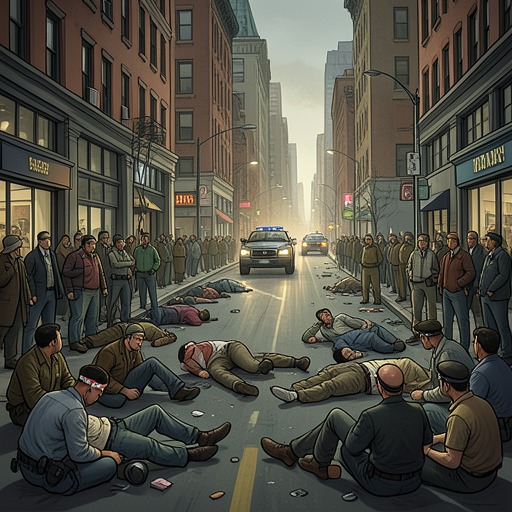
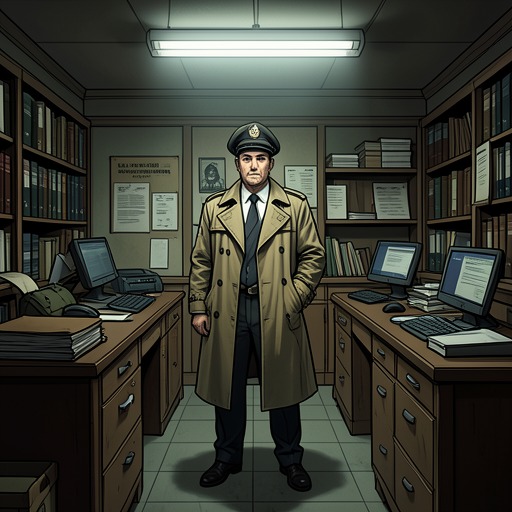
The Dark HalfThe Maine State Police is the state-level law-enforcement presence in the investigation of George Stark and the threats against Thad Beaumont’s family. Its personnel provide surveillance, technical support, and an escort, but those measures do not hold: Stark turns the apparent security around the Beaumont home into an opportunity to evade the officers and continue toward his targets.
Role in the Investigation
The Maine State Police enters the Beaumonts’ immediate circumstances as part of a protective response. In the early hours, Thad sees a cruiser across the road, dark except for the intermittent glow of an officer’s cigarette. The sight reassures him enough to help him sleep, though he cannot decide whether the officers are protecting the family or guarding it. That uncertainty captures the organization’s double role: its presence offers some comfort, but also makes the family’s danger visible and keeps their freedom constrained by the crisis.
The organization’s response includes practical surveillance technology. After Alan Pangborn’s involvement, a blue-and-white panel truck arrives at the Beaumont driveway; it resembles a telephone-company van, but discreet lettering identifies it as belonging to the Maine State Police. Two technicians ask Thad to sign a form authorizing recording and traceback equipment on the household telephone. The authorization does not grant blanket permission to use the resulting transcripts in court. Thad signs, with Pangborn and one technician witnessing the signature; the technician carries both a telephone tester and a .45. The scene shows the police assembling a tool for tracing calls while the limits of its legal use remain explicit.
Protection and Its Limits
The police presence becomes a routine that Stark can exploit. After more than a week on duty, the officers guarding the Beaumonts have grown increasingly confident that the threat has passed. Stark recognizes that their expectation of safety is the opening he needs. He considers Liz the main uncertainty, since she might see him if she were watching from the window, but assumes she and the twins will be asleep or preparing for naps. His plan depends not on defeating a visibly alert force but on taking advantage of a protective arrangement whose vigilance has slackened.
That weakness becomes consequential when Stark escapes with his family and proceeds toward the summer property. In a call with Pangborn, Maine State Police officer Steve Harrison reports that Stark has badly injured two officers and fled with the family. Harrison says Stark was driving a red-and-gray Chevrolet Suburban, which the police believe he may have abandoned before switching vehicles. He warns that Stark has a summer place in the area and asks whether Pangborn knows the location and layout. The report gives the local sheriff critical information while conveying that the state police have lost control of the pursuit.
Personnel and Narrative Significance
Harrison’s call makes the organization’s emergency response personal and immediate. He tells Pangborn that he had intended to call sooner, but that events have become chaotic; his anger at Stark’s attack is unmistakable. Pangborn, in turn, lies about calling to check on Thad, concealing his concern as he tries to understand what has happened. The exchange links the state police’s account of the escape to the sheriff’s local knowledge, and it makes clear that no single agency has an uncomplicated grasp of the unfolding crisis.
The Maine State Police therefore represents both the procedural means of responding to Stark and the limits of ordinary protection against him. Its officers watch the house, its technicians equip the telephone for tracing, and its personnel report the escape and vehicle lead. Yet a guard detail can become predictable, and technical surveillance cannot itself prevent violence. The organization’s role underscores the gap between assembling evidence and securing the people endangered by it.